Friday, April 23, 2021

Do You Hear What I Hear?


Sean Baker's Tangerine from 2015 is a fast-paced, Christmas themed comedy that gives viewers a taste of what life is like for Black, transgender prostitutes in West Hollywood. In particular, the sounds in the film help us empathize with the protagonists and make us feel like we're in the middle of the action alongside them instead of looking in on them as outsiders.

When Sin Dee first gets out of jail, she meets up with her friend Alexandra at Donut Time to celebrate, and the scene's witty dialogue and ambient noise around them helps us empathize with these women we only just met. With no other sounds like music to distract us or tell us how to feel in the moment, we pay closer attention to what Sin Dee and Alexandra are actually discussing. The audible hum of traffic outside the shop solidifies our place in the scene right beside them; we hear exactly what they hear. Upon finding out about the girl her fiancé Chester had been cheating with, Sin Dee storms out onto the street and uptempo electronic music starts playing complete with gun sound effects, showing that she is not messing around. The music combined with the shots of her strutting along the street align us with Sin Dee and her new mission to find Chester.

Towards the end of the film, each of the main characters come together, incidentally at Donut Time, and all hell breaks loose. Razmik, one of Alexandra's regular clients, shows up to see her, but his wife who just found out about his business with her and other trans prostitutes enters with their toddler. Meanwhile, his mother-in-law barged in earlier as Sin Dee, Chester, and Dinah were loudly arguing. For the majority of the scene, we only hear the dialogue and the ambient noise as well as the baby crying, which heightens the already tense mood. As Razmik and his family argue in Armenian, Sin Dee, Chester, and Dinah occasionally interject in English, and the language difference really drives home how no one's on the same page in this moment. Once Razmik leaves with the baby, we hear fast percussion music which signals a change in the action, similar to the scene when Sin Dee leaves Donut Time to look for Chester in the beginning.

The sounds of Tangerine immerse us in the world of the characters whether they're on the street, on public transport, or at Donut Time. Through dialogue, music, and ambient noise, we get to know Sin Dee and Alexandra as well as Razmik and the others, and these noises get us truly invested in their story.

Saturday, April 17, 2021

Feast Your Eyes


As a part of the New Queer Cinema movement of the 1990s, Paris is Burning by the independent director Jennie Livingston introduced the members of NYC's drag ball scene to the big screen in a way that was meant to educate mainstream white heterosexual audiences about that subculture. Despite its intent to inform, however, the film is not without its issues. Today I'd like to focus on feminist author and theorist bell hooks and her argument that Paris is Burning transforms the "ritual" of the drag ball into "spectacle."

In her essay on Livingston's documentary, hooks asserts that, "Ritual is that ceremonial act that carries with it meaning and significance beyond what appears, while spectacle functions primarily as entertaining dramatic display" (150). The camera's gaze captures all the glamour and athleticism of the ball contestants as they do their thing at the Imperial Lodge of Elks, but when it comes to the personal lives of those same individuals, we don't learn much about them outside of their relationship to the ball scene. When we do, in the case of Venus who is a classically pretty light skinned woman, the story ends in her death which is still ultimately framed as spectacle. That a young, beautiful, white-passing girl who claims to want nothing more in life than to be adored and spoiled dies is a tragedy but one that does not need further investigation or explanation according to the film.

I believe part of the reason behind Livingston's presentation of ball culture and its participants as spectacle rather than ritual has to do with her intended audience. It's pretty safe to say that the documentary is aimed at "outsiders" who want to look in on a marginalized subculture they're not a part of, i.e. cisgender heterosexual white people belonging to the middle and upper classes. In order to capture the interest of that particular audience, Livingston packs the film with images of lively, glitzy drag balls meant to elicit "oohs" and "aahs" from viewers. Another tactic she uses is the repeated message that these Black and brown queer people aspire to become their white cishet counterparts because as we said in class, white audiences typically want the media they consume to somehow relate back to whiteness. 

The depiction of spectacle is a key aspect of Paris is Burning and likely contributed to its commercial success. This film goes to show that even when watching documentaries which are meant to inform, mainstream audiences want to be entertained, even if entertainment comes at the expense of omitting the true complexity of the subject matter.

Saturday, April 10, 2021

Hard on the Outside, Softer on the Inside


Mariana Rondón's Pelo Malo from 2013 gives viewers a glimpse into the life of a young boy named Junior as he navigates family struggles and begins the process of figuring out who he wants to be. Part of this journey involves observing people in his urban Venezuelan neighborhood, most notably Mario, the older boy who works at the kiosco on the street below Junior's apartment. 

The many shots of Junior gazing at Mario can be interpreted in a few ways. Because the film deals with Junior's gender nonconformity and its repercussions, there's a strong case to be made that Junior's fixation is an innocent childhood crush. Alternatively, the older teen could represent the sort of masculinity the younger boy wants to emulate. There's also the possibility that Junior is simply observing this figure who's conventionally masculine in how he presents but is accepting of his friend for who he is. Regardless, Mario is the only male character that Junior likes to spend time with, which is interesting given that he must go to school with lots of little boys his own age.

On the outside, Mario is a man's man. He works for a living, shoots hoops in his spare time, has close-cropped hair, and sits with his legs splayed far apart. He's also totally fine with Junior just being who he is and isn't afraid to show that he cares about the younger boy right on the street where anyone can see them. As part of the boy's chosen family, he's the one Junior turns to after the massive fight with his mom where she cuts a lock of his hair with scissors. Instead of passing judgement or shooing him away, Mario gives him his hoodie and the two sit for a bit, with Mario taking up as much space as possible and Junior doing the opposite. Despite his macho appearance, the teen never comments on the things that set Junior apart from other boys. More than anything, Mario exhibits a form of masculinity that doesn't demean other expressions of gender in order to legitimize itself, highlighting how even the side characters in this film have nuance.

Tuesday, March 30, 2021

FIST325 Introduction


Hey gang, my name is Holly (she/her), and I'm a senior History and Spanish major. I'm from Phoenix, AZ, but for now I've traded warm sunshine for the unpredictable spring weather Appleton has to offer. One of my main historical interests is examining the historical significance of films and the specific contexts in which they were created. I'm also into analyzing how gender and sexuality are represented onscreen and what sorts of messages various types of visual media send to viewers in regards to how one should or shouldn't act based on gender identity and sexual orientation. Most popular films/TV series that deal with queerness and have LGBTQ+ characters focus on white people's perspectives, and as a queer woman of color myself, I jumped at the opportunity presented by this class to engage with material that explores queer BIPOC and their experiences. 

In my free time, I've started writing and recording my own songs. Here's my newest EP:

Spotify: https://open.spotify.com/album/7j5LXNyb88GMf1rl0pPryc?si=NAcxOYWgSnWdkrbLPDt2hg

Soundcloud: https://soundcloud.com/gthirtyeight-670005780/sets/everything-you-thought-you-knew

Thursday, November 12, 2020

Bodies, Bodies, Bodies


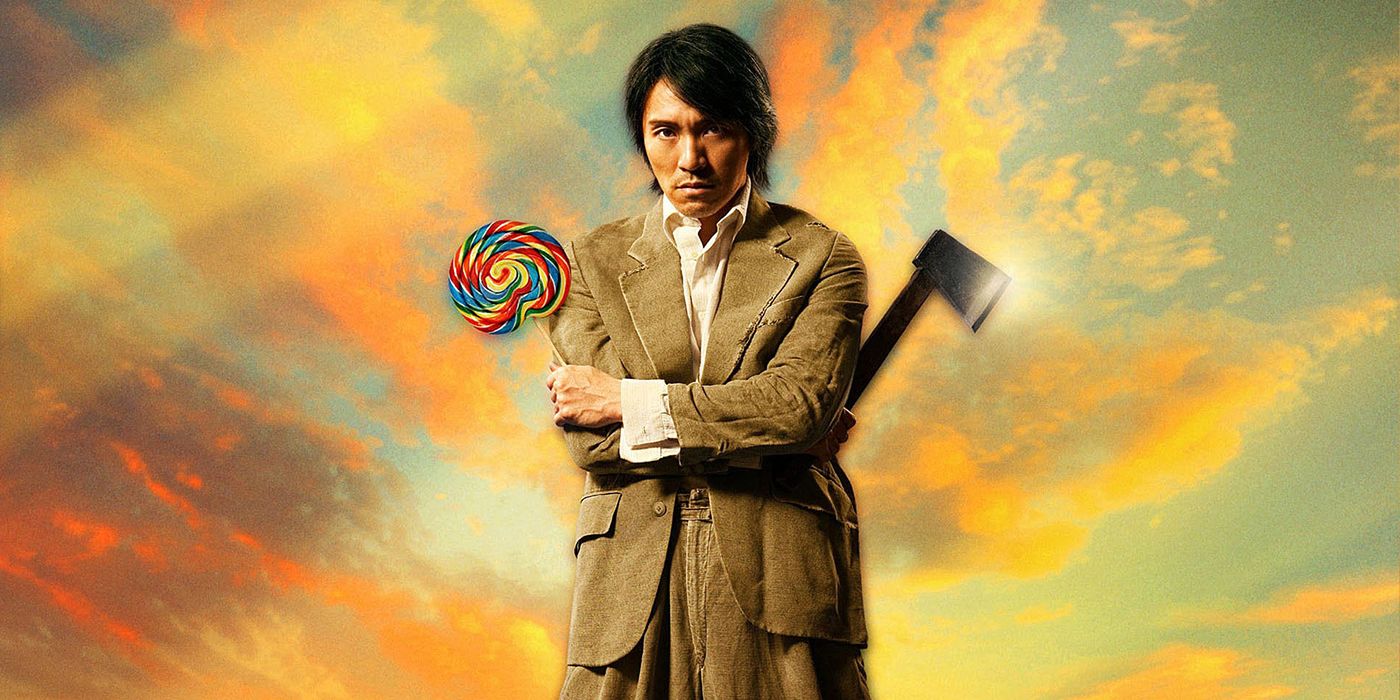
What if people could run at super speed, leap to incredible heights, and take all kinds of punches without hardly flinching? This is the world of Stephen Chow's 2004 action flick Kung Fu Hustle, where the normal limits of the human body don't exist nor do the laws of physics. The action sequences are gratuitously excessive, but these sorts of over-the-top depictions of bodies and what they're capable of are exactly what appeal to audiences across the world.

The film's fixation with bodies is apparent from the start when we're introduced to the people of Pigsty Alley. Even the most unsuspecting residents like little boys and old people are revealed to have insanely strong bodies to a comical extent. However, it's not just those with visible muscles who are able to kick ass. One of the original top warriors was an effeminate tailor, and even the landlady has phenomenal physical abilities like running at super human speed and "the lion's roar". While most films depict the masses as ordinary folks who are generally boring, Pigsty Alley provides an alternative vision of reality in which practically everyone is physically powerful and able to fight off bad guys. Furthermore, Kung Fu Hustle challenges the notion set forth in The Incredibles that if everyone is special then really nobody is. Instead, viewers are likely to believe that the people of Pigsty Alley are indeed special, precisely because they are a mass of seemingly regular people who are actually anything but that.

The main character also has spectacular capabilities. In one humorous moment, his sidekick accidentally throws three knives in his shoulder, and soon after he is attacked by snakes. Just a few scenes later, though, our man is as good as new, shoulder and swollen lip completely healed. He later shows off his skills in kung fu and all of the acrobatics that come along with a well-choreographed fight sequence. The final showdown between him and the Beast is of course excessive. Both men do so many things that humans can't do in real life, but that's why audiences are watching. 

Characters like James Bond, Captain America, and the people in Kung Fu Hustle use their bodies to pull off wild stunts and come out unscathed, and this language of movement transcends national boundaries. David Bordwell writes in one chapter of Planet Hong Kong: Popular Cinema and the Art of Entertainment, "In many movies, the chief pleasures are pictorial," which holds true especially in the case of action films (7). People don't go to gratuitously violent summer blockbusters for the dialogue; they go for the visual spectacle, including seeing bodies moving and acting on screen in ways that they can't in the real world. Regardless of what sort of cultural background we come from, we want to see the impossible become possible, and popular cinema allows us to do that.


Friday, November 6, 2020

Do the Right Thing


As Nigeria rapidly urbanizes, some citizens have concerns for its potential effects on people's sense of community and the behavior of individuals. Two such people, Uche Chukwu and Kiki Omeili, voice these concerns through Nollywood cinema. Chukwu is the director of Run (2019), which was written and produced by Omeili who also stars in the film as its protagonist. Run explores the dark side of these sprawling metropolises by exposing the self-serving behavior of the people the main character encounters on a late night jog gone awry. At the same time, this woman, Tomilola, is a beacon of hope among all these self-interested city-dwellers because she always takes the moral highroad, even if it inconveniences her.

Right off the bat, the film establishes Tomilola as a good person, maybe almost too good. She works hard at her company, goes running, checks her breasts for lumps every day, and flosses; the woman can seemingly do no wrong. Even her last name is Wright. One night, however, she makes the mistake of leaving her phone at home to charge and forgetting her wallet, too. After witnessing a national politician shoot someone under the cover of night and the anonymity of the city, one of his henchmen chases her until she has to call a cab to go home.

The driver threatens her when she can't pay him, and she ends up on the run again, this time encountering a variety of people. Tomilola sees a couple engaging in prostitution, a cook and her customers at a food stall on the side of a road, and a group praying around a woman about to give birth. Although Tomilola comes to each of them visibly in distress, none of them make any attempt to help her. This is a critique of the coldness of big city life in which everyone is too caught up in their own lives to take the time to assist someone in need. 

Despite the lack of empathy from those around her, Tomilola still wants to help others. She insists that the prostitute and her client use protection and that the group praying should take the woman in labor to a hospital. Towards the end of the film, her selflessness extends to the man from the roadside food stall who chases her after she tries to take his phone to call her friend in order to get to safety. He suddenly collapses from a seizure, and instead of grabbing the phone and running, she moves his body into a secure position and then calls an ambulance. Tomilola is a prime example of a fictional, on screen character serving as a role model "for upcoming generations of Nigerians who see the country in a different light as portrayed by Nollywood" (Akinola 24). Run concludes with Tomilola finally being aided by local police, and her story from that night leads to the eventual arrest of the politician whose actions caused the whole misadventure in the first place. This optimistic ending illustrates that being a moral person in the face of adversity will lead to good outcomes, a message that is a bit oversimplified but nonetheless encourages people in urban areas to remember the humanity in everyone.


Wednesday, October 28, 2020

Good Ol' Fashioned Heteronormative Family Fun


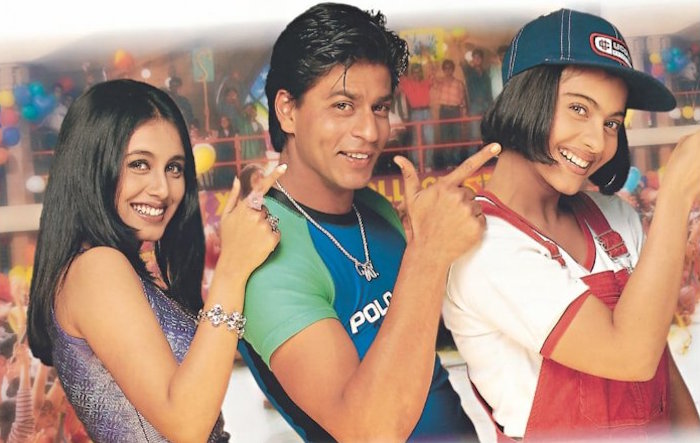
Let me preface this by saying I had a fantastic time watching Kuch Kuch Hota Hai this week. I think, though, that while Karan Johar's Bollywood musical is chock-full of catchy melodies, bright colors, and 90s nostalgia, its underlying messages about gender and what constitutes a happy family (and therefore a happy ending) are worth examining a little more critically.

For starters, Anjali Sharma's story arc is troubling in that it reinforces the cliche notion that women must look and act traditionally feminine in order for them to find a man. Teenage Anjali wears her hair short, dresses in sporty clothes, and loves playing basketball. She seems very true to herself and comfortable presenting the way she does, yet as an adult, we find her with hair well past her shoulders and wearing more feminine attire. By that point, too, she has not one but two male love interests. Regardless of whether or not Rahul harbored feelings for Anjali when they were young, he pursued and eventually married the prim girly-girl, Tina. 

Not long into the film, however, Tina dies, leaving Rahul to raise their daughter who's named Anjali after their childhood friend who had since moved away. This is something he is actually quite capable of, with a little help from his mother. Their multi-generational household presents a viable alternative to the traditional heterosexual nuclear family. In fact, the homoerotic tension between Tina and Anjali Sharma throughout the flashback sequence covertly proposes yet another possibility. Ultimately, neither of those make the cut, and Rahul and Anjali marry in a typical Hollywood happy ending.

Kuch Kuch Hota Hai, as enjoyable as it is, is a prime example of popular cinema used as a vehicle to promote socially conservative ideals surrounding marriage, gender, and family. As consumers of those sorts of films, we're fed these messages over and over to the point where most of us internalize them and accept them as the truth. Obviously today there are mainstream films that push back against these traditional ideologies, but this is an interesting international example of how cinema can be wildly entertaining yet still advocate for conventional social norms when we look beneath the surface.

Come for the Aliens, Stay for the...???

  While it seems like some people in the class enjoyed Gregg Araki's  Mysterious Skin , the rest were thoroughly disturbed and wondered ...